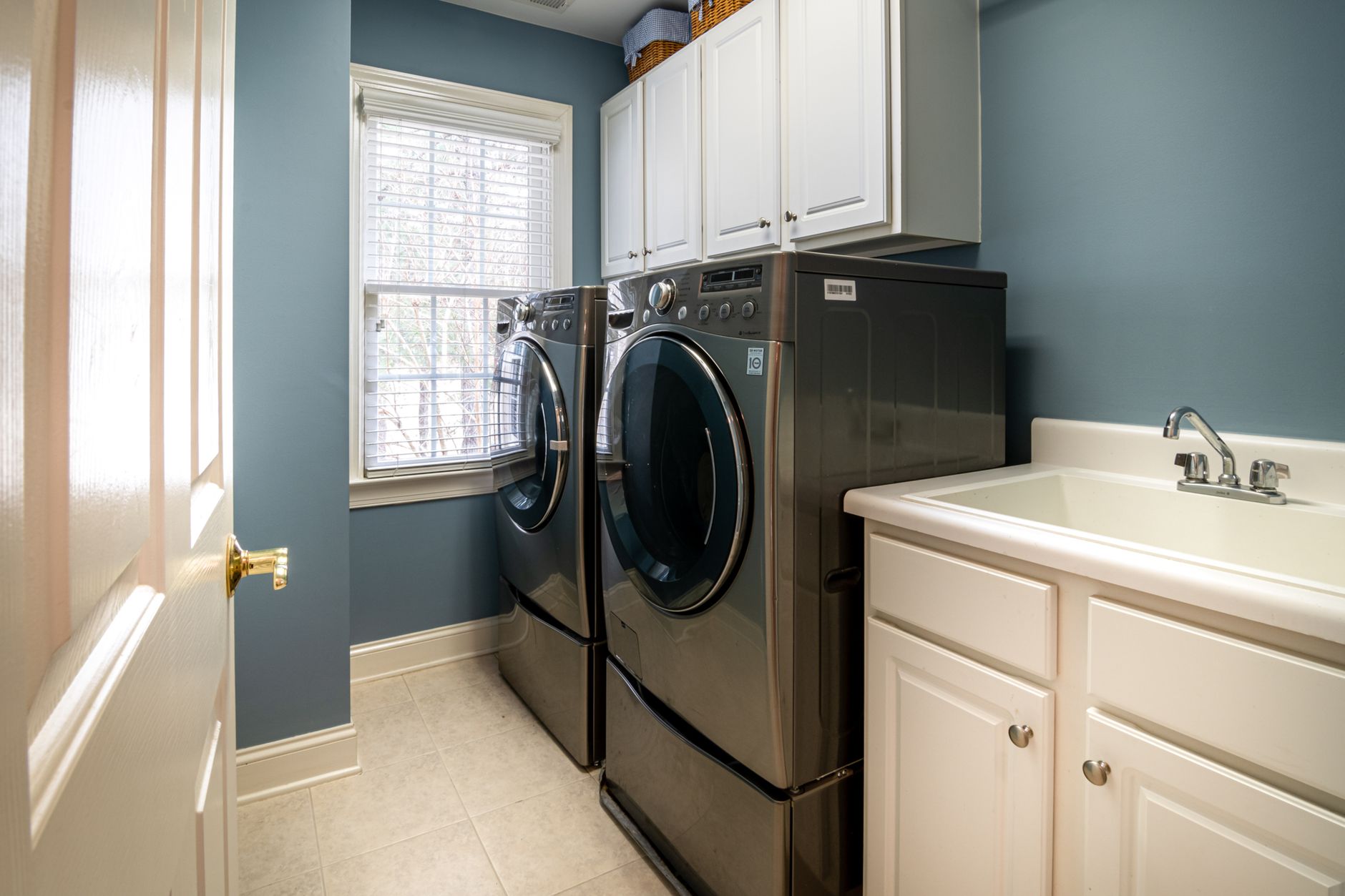
No-heat dryers have a short suspect list, and the top of it is not a part at all — it is the vent. Restricted airflow overheats the machine until the thermal fuse gives its life to prevent a fire, and the dryer tumbles on, cold, until someone treats the cause.
The fuse and its reasons
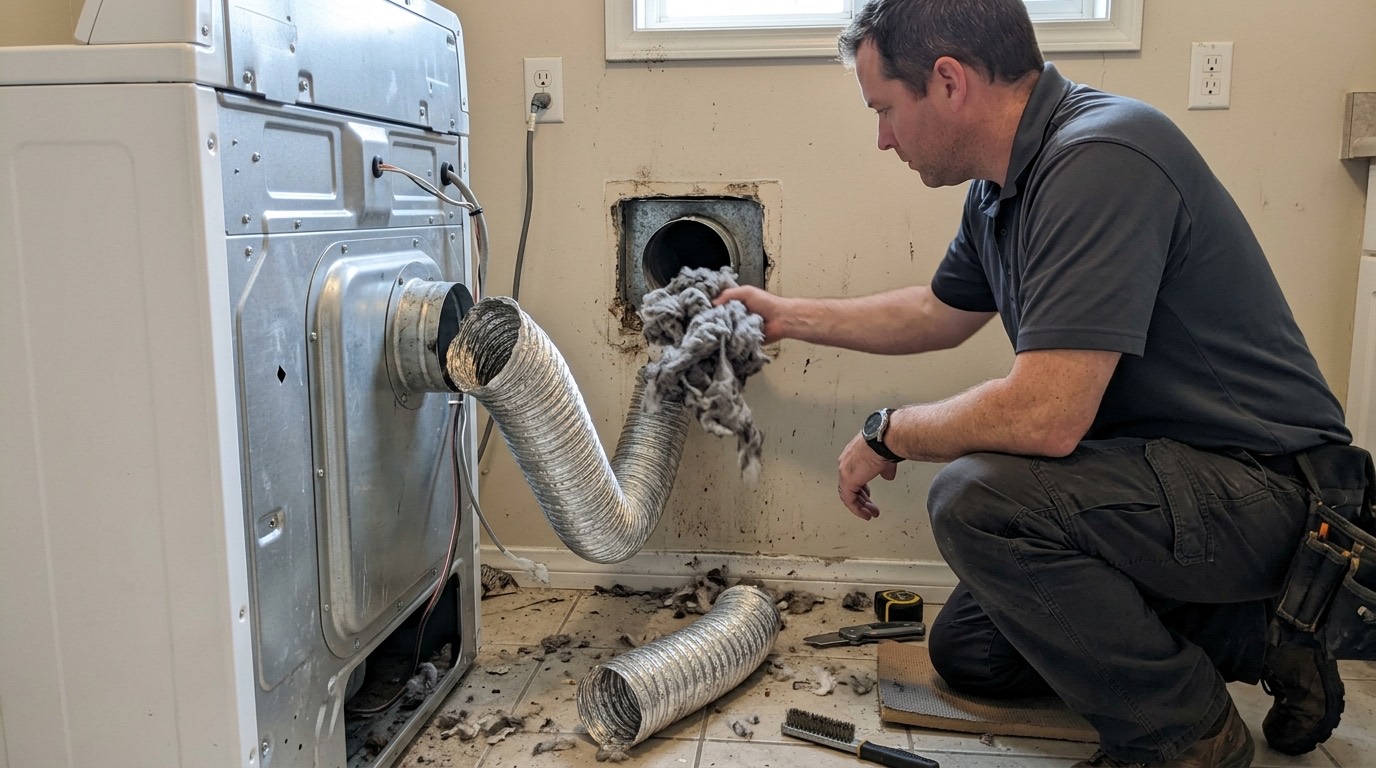
Replacing a blown thermal fuse without clearing the duct is a scheduled repeat visit. Gulf humidity makes lint damp and sticky, so Pensacola ducts mat up faster than dry-climate ones — the fuse-plus-vent combination is the honest repair here.
Beyond the fuse: elements and cycling thermostats on electric models; igniters, flame sensors, and valve coils on gas. All common, all truck-stock items.
Quick owner checks
Confirm both halves of the dryer's 240V breaker — one tripped leg means motion without heat. Clean the lint screen, then watch the outside flap mid-cycle: weak or no airflow convicts the duct before anyone opens the cabinet.
Salt air adds one more: an exterior vent hood corroded shut. It is a two-dollar part doing million-dollar fire prevention — worth a look every season.
Gas versus electric symptoms
Gas dryers narrate their ignition: click, glow, whumpf. A glow that never becomes flame is usually the gas valve coils; no glow at all is the igniter. Electric failures are quieter — the meter tells the story instead.
The takeaway for coastal laundry rooms
Annual vent service, seasonal glance at the hood, and immediate attention when dry times stretch — that trio prevents most of the no-heat calls Escambia County makes, and shortens every load in between.
Act in this order
Breaker, lint screen, outside flap. Any of the three may end the story; if not, book it with the model tag, gas-or-electric, and whether the heat died suddenly or faded. Sudden is a part; faded is the duct.
Whatever the part turns out to be, have the vent cleared the same visit — in this humidity it is not optional maintenance, it is half the repair.