Inconsistent baking is almost always the oven misreporting its own temperature. The causes make a short list, they are cheap to confirm, and most fixes fit in a single visit.
Measure before assuming
An oven thermometer at 350 for twenty minutes gives you magnitude and direction. Small steady error: calibration offset in the controls. Wild swings or cold zones: hardware.
The parts that drift
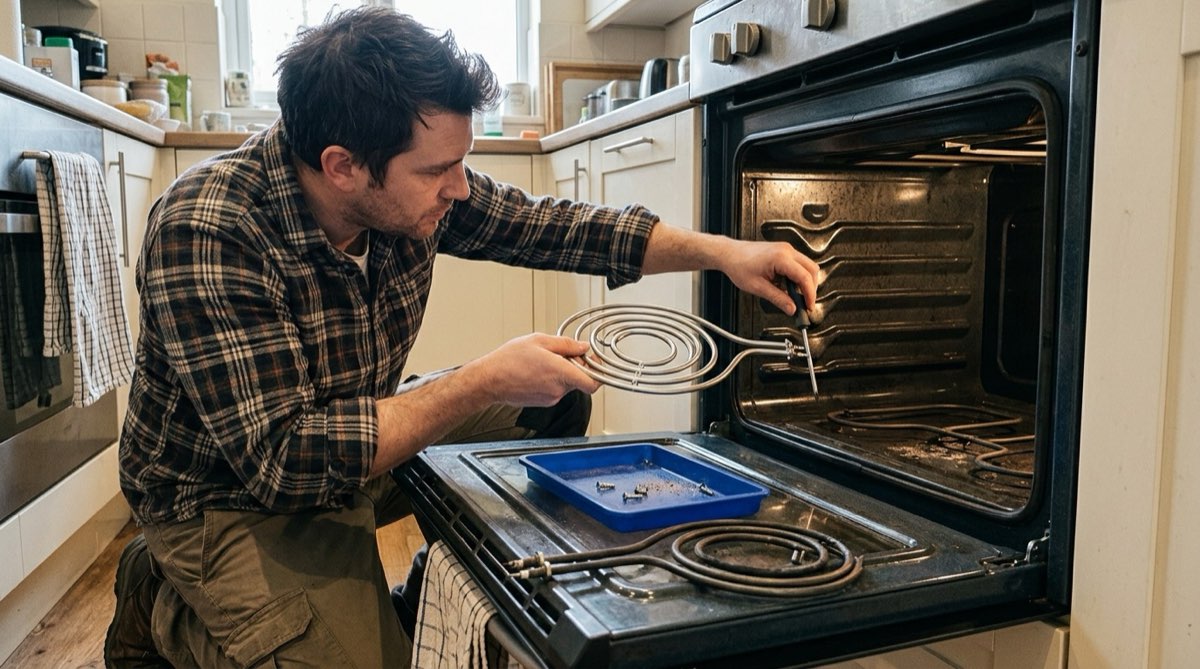
Electric bake elements fail visibly — blisters, dark patches, dead spots you can see. Temperature sensors drift out of spec invisibly but read out in ohms in two minutes. Gas igniters weaken with age and drop the flame mid-bake, which the kitchen experiences as temperature chaos.
Convection fans add one more suspect; when the fan dies, 'even' baking turns into a hot rear corner.
Storm season and control boards
Pensacola's outage-and-surge cycle scrambles oven electronics regularly: displays acting possessed, functions swapping, preheats that never finish. A full two-minute breaker reset cures a surprising share; what it does not cure is board-level damage — that gets diagnosed and quoted.
Self-clean, a warning
The self-clean cycle runs the oven hotter than any bake ever will, and it is the classic last straw for aging elements and thermal fuses. If the oven died the day after cleaning itself, lead with that detail — it names the suspect immediately.
Make the call with data
Bring the thermometer verdict, the model tag, and the origin story — after self-clean, after the outage, or gradual drift. Those three details usually name the part before the truck leaves the shop.
Until the visit, skip the test bakes. The oven has already told you everything a burnt sheet of cookies can.