When the refrigerator hums but the milk is warm, the machine has lost airflow or heat exchange, and Florida heat shortens your decision window. Run this triage, then make the call — same-day, if it is truly warm.
The five-minute pass
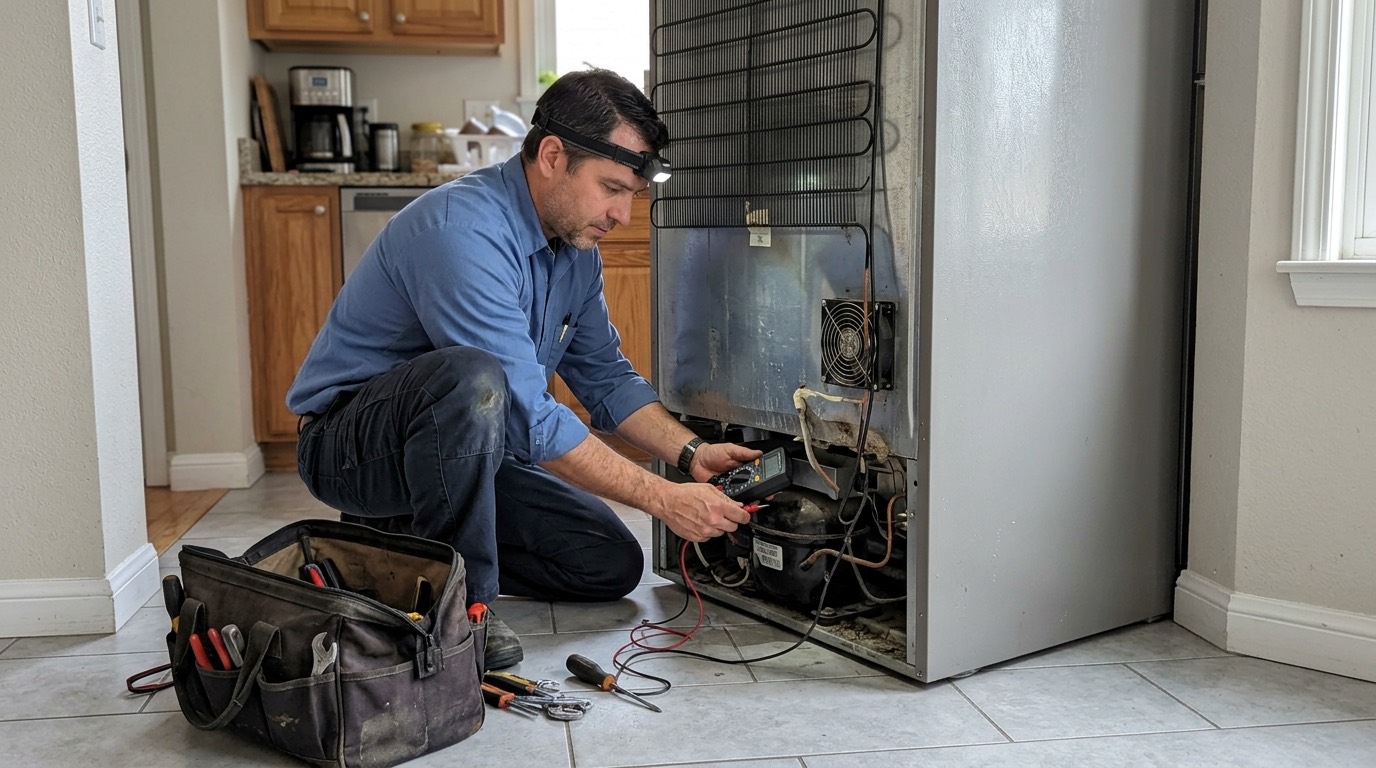
Settings first (they get bumped), then freezer vents (blocked by food more often than broken), then door gaskets (a paper slip should drag when pulled). Then pull the unit and look at the condenser coils — in humid coastal air, dust mats into felt, and felt-wrapped coils cannot shed heat.
Listen and locate
Missing compressor hum: start relay or compressor. Dead fan below (condenser) or behind the freezer wall (evaporator): warm zones with a working compressor. Rhythmic clicking: the relay failing to launch — that one is a today call, not a this-week call.
The defrost giveaway
Frost sealing the back freezer panel means the defrost heater, thermostat, or control quit. The pattern is distinctive: fridge warms up, mysteriously recovers after a day unplugged, then fails again. That 'self-repair' is the diagnosis.
Coastal specifics
Garage and lanai refrigerators live hard here — salt air corrodes connections and hot garages make compressors work overtime; check their GFCI outlet after every storm. And during hurricane season, keep the freezer full (water bottles count): thermal mass buys hours during outages and makes any failure less expensive.
Don't out-wait the groceries
If the five-minute triage finds nothing obvious, book same-day while the cold holds. Fans, relays, and defrost parts — the likely fixes — are cheap precisely when they are caught early.
Report the sounds, the frost if you saw it, and the model tag; then keep the doors shut and let the thermal mass work for you.