Pensacola appliances live with a weather pattern that hits them twice — once when the power dies, again when it slams back on. Knowing which post-storm symptoms are real damage and which are recoverable saves both panic and money.
When the lights come back
Give refrigeration a few hours to recover before declaring it broken. Check every breaker, including the dryer's double-pole. Hard-reset anything acting strange — two minutes unplugged clears wedged control boards more often than seems fair.
Then walk the garage and lanai: GFCI outlets trip during electrical events and silently kill the freezers plugged into them. That discovery is better made today than in August by smell.
Recognizing surge damage
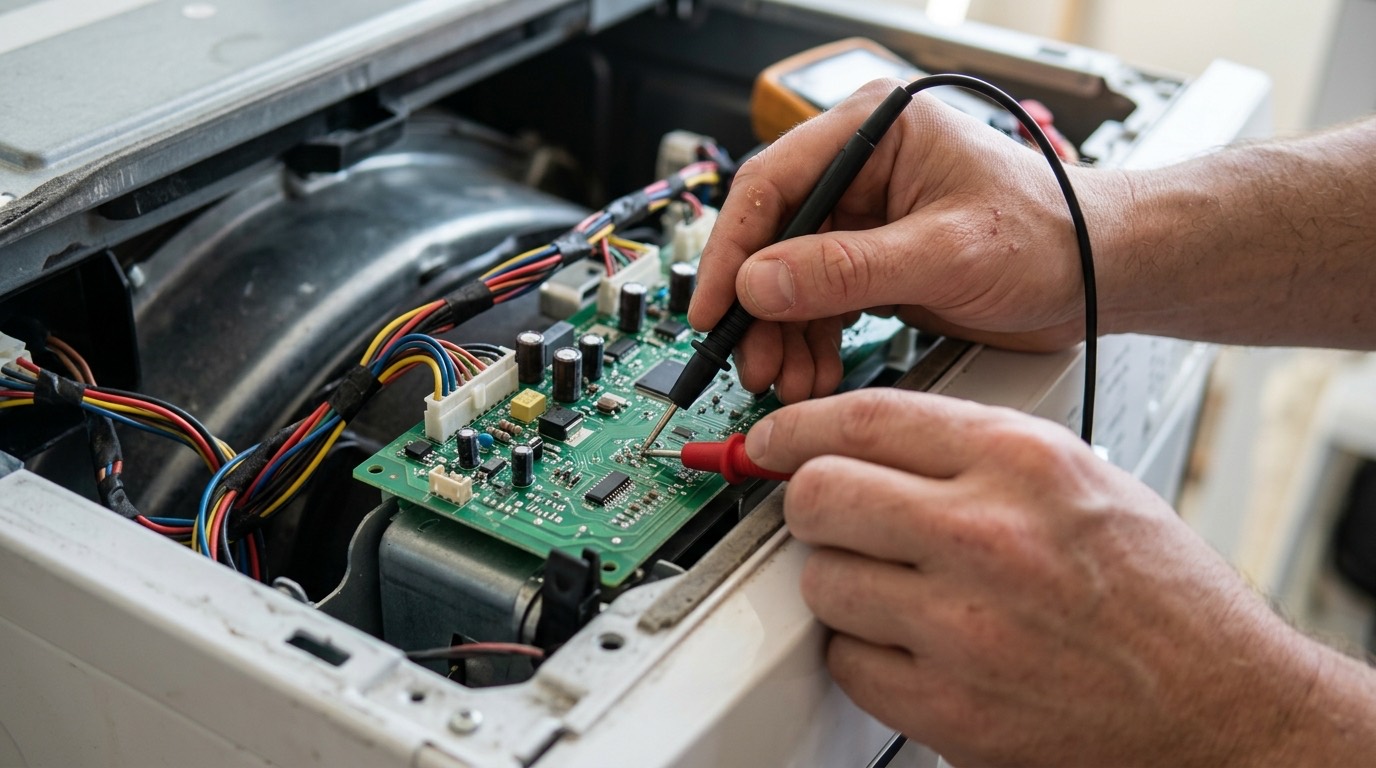
Stone-dead machines after power restoration, scrambled displays, burnt-smelling electronics: that is the surge signature. Modern appliances take these hits in the boards, not the motors — repairable, but diagnose before replacing parts blindly.
Brownouts do slower harm: compressors that survived but run hot and loud afterward have shortened futures — worth a checkup while the damage is a checkup-sized problem.
Paper for the adjuster
Photograph everything with dates, keep the outage timeline, and get the tech's written 'surge-consistent failure' diagnosis. Homeowner policies and utility claims both move on exactly that documentation, and Escambia adjusters see these files every season.
Before the next named storm
Whole-home surge protection at the panel, point-of-use protectors on the fridge and laundry pair, the freezer kept full, and the quarter-on-frozen-water-bottle trick for evacuations. Cheap, boring, and exactly what the season calls for.
Your storm-season routine
After every event: breakers, hard resets, a listen at the fridge, the garage GFCI. Every June: surge protection verified, freezer filled, water-bottle-and-quarter set. After real damage: photos, timeline, written diagnosis, claim.
Fifteen minutes a season against board-replacement prices — Escambia weather math never gets easier than that.