When a washer stops full, the exit path failed — and the path is mercifully short: trap, hose, pump, and the switches that authorize them. Work it in order and most cases resolve fast; push cycles against a blockage and a cheap fix becomes a motor job.
Two checks before any call
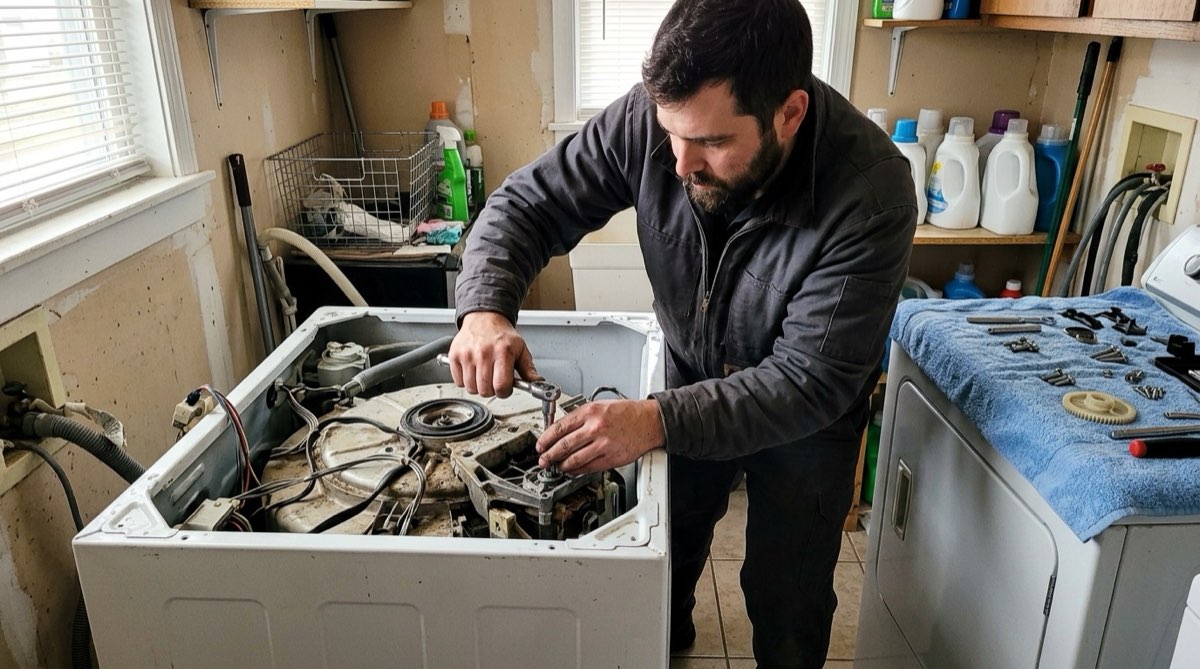
Front-loaders: the coin trap behind the lower panel, opened with towels ready, clears socks, pins, and Gulf-beach sand — a genuine local contributor. Check the drain hose for kinks and confirm it sits loosely in the standpipe; an airtight fit breaks the siphon.
Top-loaders that fill but neither drain nor spin: suspect the lid switch first. It is one of the cheapest parts on the machine.
Let the sound testify
Humming and straining at drain time: pump fighting an obstruction. Grinding: pump destroying its impeller — stop running it. Silence when the drain should start: electrical, from switch to timer to board. Report the sound when you book; it pre-sorts the visit.
The humidity subplot
Coastal machines add corrosion to the usual story: rusted clamps, stiffened check valves, residue that catches lint into slow clogs. A drain that has been slowing for months is telling you which version you have.
Protect the machine while you wait
Bail below the door line before opening a front-loader, skip repeat drain attempts, and leave the water in place otherwise — the tech wants to see the failure, not its cleanup. With the model tag and the sound description in hand, most drain calls end the same visit.
Stop, then call
One pass through trap and hose, then stop — repeat drain attempts against a blockage are how impellers strip. Bail below the door line if you must open it.
Book it with the model tag, the drain-time sound, and the how-fast-it-developed answer; that last one names slow clog versus sudden failure before anyone opens the cabinet.